

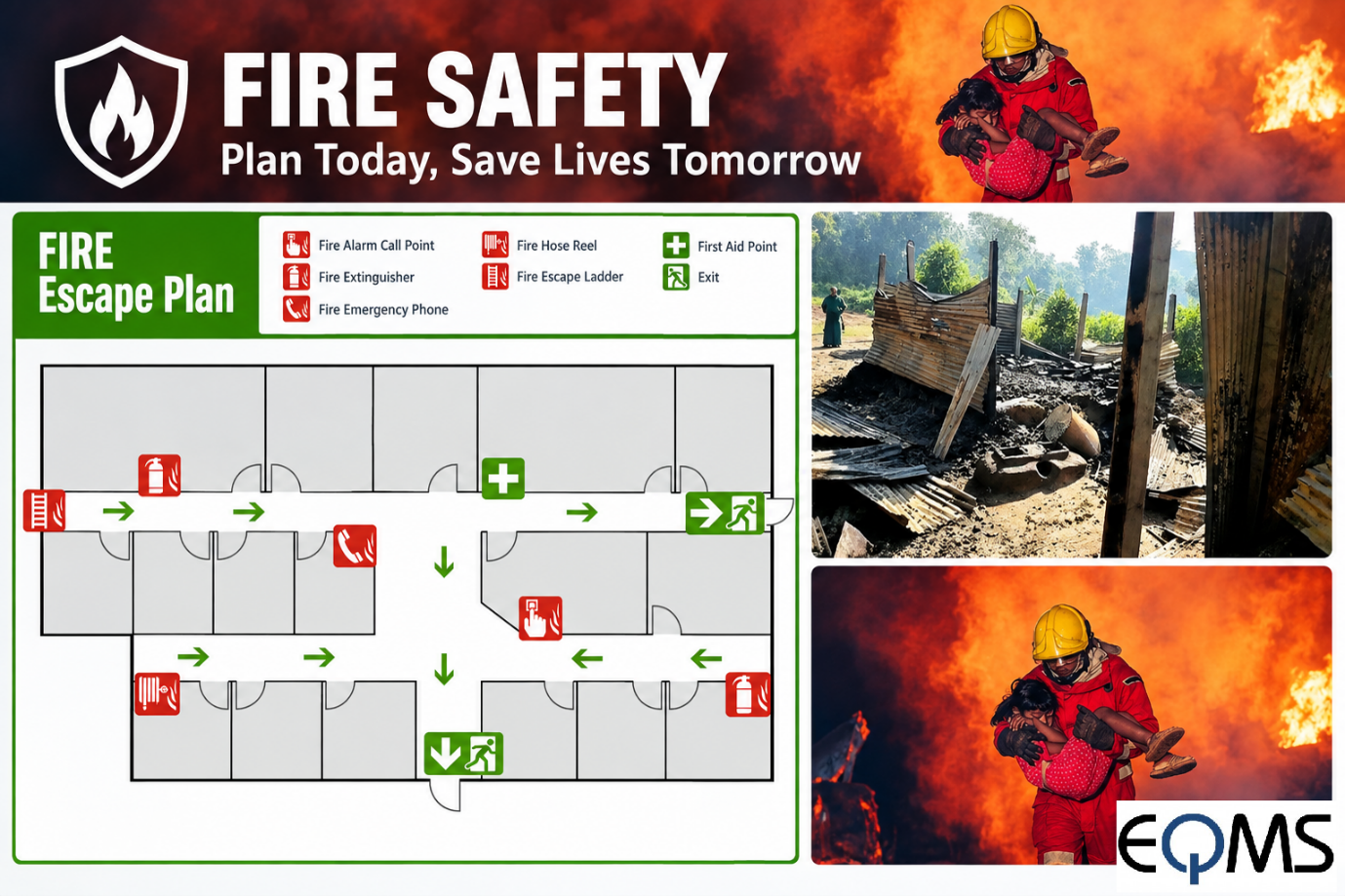
Fire is one of the most common and dangerous hazards that
can occur at home, in workplaces, factories, commercial buildings, and public
places. A small fire can quickly become uncontrollable, causing serious
injuries, loss of life, property damage, and significant financial losses. That
is why taking proper fire safety measures is not just a responsibility, it is a
necessity.
- v
Protecting Lives
The primary objective of fire safety is to protect human
lives and minimize the risk of injury or loss of life during a fire emergency.
Fire can spread rapidly and may produce intense heat, smoke, and toxic gases
that can make escape difficult within a short period. Effective fire detection
and alarm systems provide early warnings, allowing occupants to respond quickly
and begin evacuation before conditions become dangerous. Clearly marked,
accessible, and unobstructed emergency exits are essential for safe evacuation.
Emergency lighting and exit signage should help occupants find escape routes
even when normal lighting fails. Proper evacuation plans should identify escape
routes, assembly points, and responsibilities during an emergency. Regular fire
drills and training help occupants understand how to respond calmly and
efficiently. Together, these measures improve emergency preparedness, reduce
evacuation time, and provide occupants with a safer means of escaping a fire.
- v
Preventing Property Damage
Effective fire safety measures play an important role in
protecting buildings, equipment, materials, documents, and other valuable
assets from fire-related damage. A fire can cause extensive structural damage
and may destroy expensive machinery, electrical systems, furniture, stored
materials, and important records. Early detection through suitable fire alarm
and detection systems can provide valuable time for occupants and emergency
responders to take appropriate action. Fire extinguishers, hose reels,
hydrants, automatic suppression systems, and other firefighting facilities can
help control or suppress a fire at an early stage, where appropriate. Proper
separation and storage of combustible materials can also limit the spread of
fire between different areas. Regular inspection and maintenance of electrical
installations, firefighting equipment, and building systems further reduce the
likelihood of serious damage. By combining prevention, early detection,
compartmentation, and firefighting provisions, organizations can reduce
potential property losses and improve the resilience of their buildings and
facilities.
- v
Reducing Fire Risks
Reducing fire risks requires identifying potential ignition
sources, combustible materials, and unsafe conditions before they develop into
an emergency. Common fire hazards may include overloaded electrical circuits,
damaged wiring, improper storage of flammable materials, open flames, hot work,
smoking materials, and poorly maintained equipment. Regular fire risk
assessments and workplace inspections can help identify these hazards and
establish appropriate control measures. Electrical systems and equipment should
be inspected and maintained by qualified personnel, while combustible and
flammable materials should be stored safely and away from ignition sources.
Good housekeeping is also essential because accumulated waste, packaging, and
other combustible materials can contribute to fire development and spread.
Appropriate fire detection, alarm, suppression, and firefighting equipment
should be provided according to the identified hazards. Employees and building
occupants should receive basic fire safety training so they can recognize
unsafe conditions and report them promptly. These preventive measures can
significantly reduce the likelihood and potential impact of fire incidents.
- v
Being Prepared for Emergencies
Emergency preparedness is essential for ensuring that people
know how to respond quickly and safely when a fire occurs. A well-developed
fire emergency plan should clearly define the actions to be taken after
detecting a fire or hearing the alarm. It should include emergency contact
information, evacuation routes, designated assembly points, responsibilities of
emergency response personnel, and procedures for assisting people who may
require additional support. Fire alarms and emergency communication systems
should be regularly tested to ensure they operate properly when needed.
Firefighting equipment, emergency lighting, exit signs, and other life-safety
systems should also be inspected and maintained regularly. Conducting periodic
fire drills helps occupants become familiar with evacuation procedures and
identifies weaknesses in the emergency response plan. Training should emphasize
raising the alarm, evacuating safely, avoiding elevators where prohibited, and
contacting emergency services. Effective preparation reduces confusion and
delays during an actual emergency and helps ensure a coordinated response that
protects people and limits potential damage.
- v Creating a Safety Culture
Creating a strong fire safety culture means making fire
prevention and emergency preparedness a shared responsibility among management,
employees, visitors, and other building occupants. Fire safety should not be
considered only the responsibility of designated safety personnel; everyone
should understand their role in preventing fires and responding appropriately
to emergencies. Regular awareness programs and training can help employees
recognize common fire hazards, maintain good housekeeping, use electrical
equipment safely, and report unsafe conditions. Fire safety policies and
procedures should be clearly communicated and consistently followed throughout
the organization. Management should demonstrate commitment by providing
appropriate resources, maintaining fire protection systems, conducting regular
inspections, and arranging periodic fire drills. Employees should be encouraged
to participate actively in safety activities and report potential hazards
without delay. A positive safety culture promotes responsible behaviour,
improves emergency preparedness, and encourages continuous improvement. By
integrating fire safety into everyday workplace practices, organizations can
create a safer environment and reduce the likelihood and consequences of fire incidents.
Share this page via